Internal tools and systems
The software your staff use all day is usually the software nobody chose. It came with something else, or it was the cheapest option four years ago.
What we build
-
Job and workflow management
Jobs through their real stages, assigned to real people, with the status visible without anyone asking.
-
Booking and scheduling
Availability, capacity, reminders, rescheduling. Built around how you actually book, including the exceptions.
-
Quoting and invoicing
Quotes built from your own pricing rules, converted to invoices, tracked to payment.
-
Customer records
Every interaction in one place. Not a CRM you pay per seat for and use a tenth of.
-
Operational dashboards
The five numbers you check every morning, on one screen, current.
-
Stock and inventory
What you have, where it is, what it cost, what it is worth.
Why staff actually use it
Internal tools fail for one reason: they are harder than the spreadsheet they replaced. So we build around the person doing the job. Fewer screens, sensible defaults, and the thing they do forty times a day on the first screen rather than three clicks in.
We also build roles properly. Not everyone should see cost price, margin, or each other's numbers. That gets designed in at the start.
How we price it
Every build is different, so there is no list price. We work out what you need, then quote the whole job as a fixed number with a written scope. You will know the cost before anything starts, and it will not move unless you ask for something new. What it comes to depends on what you want it to do, so the first step is a conversation.
Frequently asked questions
Why build internal software instead of buying a CRM?
If a CRM fits, buy the CRM. Build when you are paying per seat for a product your team uses a tenth of, or when the thing that actually runs your business lives in a spreadsheet beside it.
Will my staff actually use it?
Only if it is easier than what they use now. That is the whole design problem. We build around the person doing the job, so the thing they do forty times a day is on the first screen.
Can we control who sees what?
Yes, and it gets designed in at the start. Cost price, margin and each other's numbers are the usual ones people want hidden.
Can it work on a phone out in the field?
Yes. Tell us early, because building for a phone from the start is different from adapting to one later.
Platforms in daily use
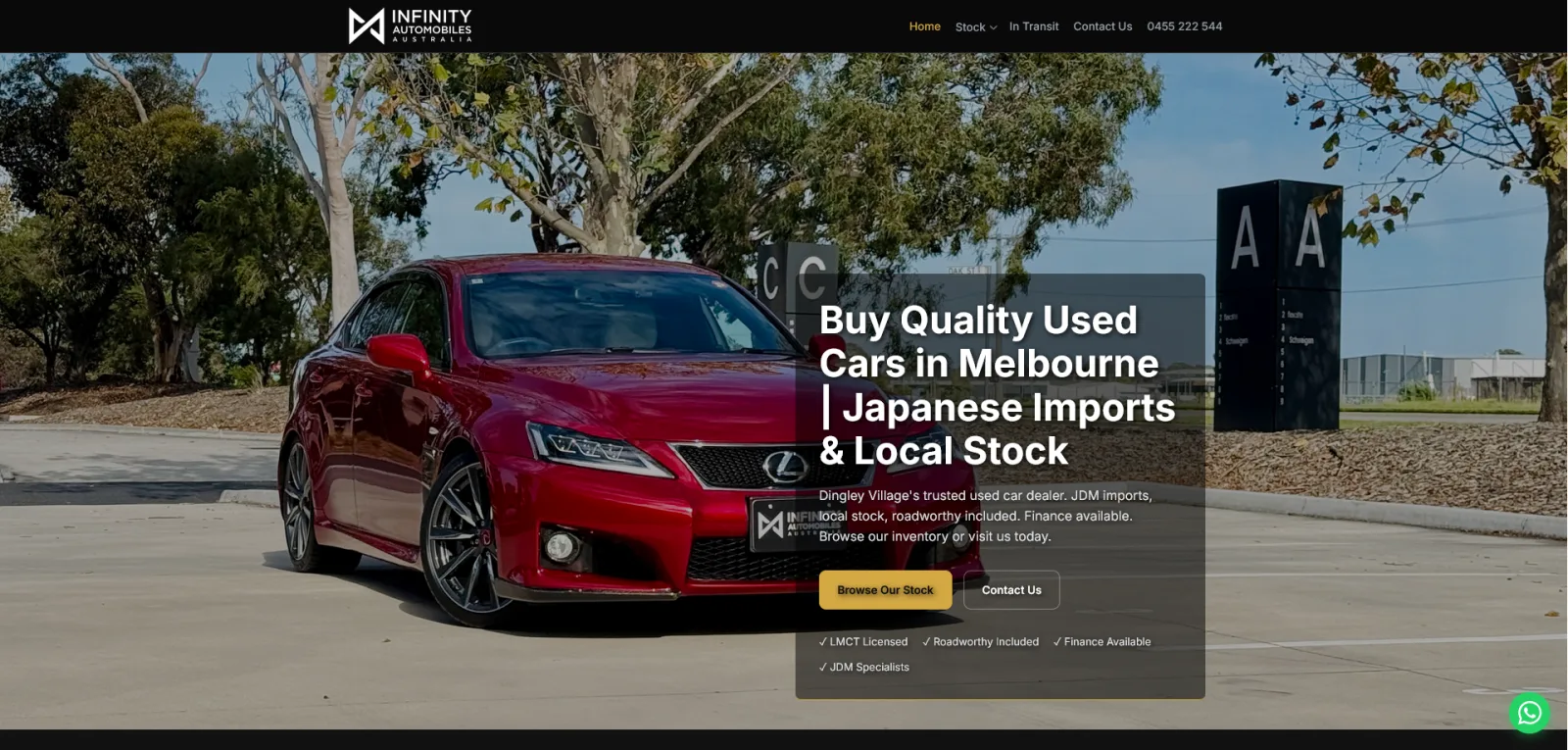
Dealership website
Infinity Automobiles
A Melbourne Japanese import dealership. We build and run the platform, and we also own the dealership, which means we use this one ourselves every day.
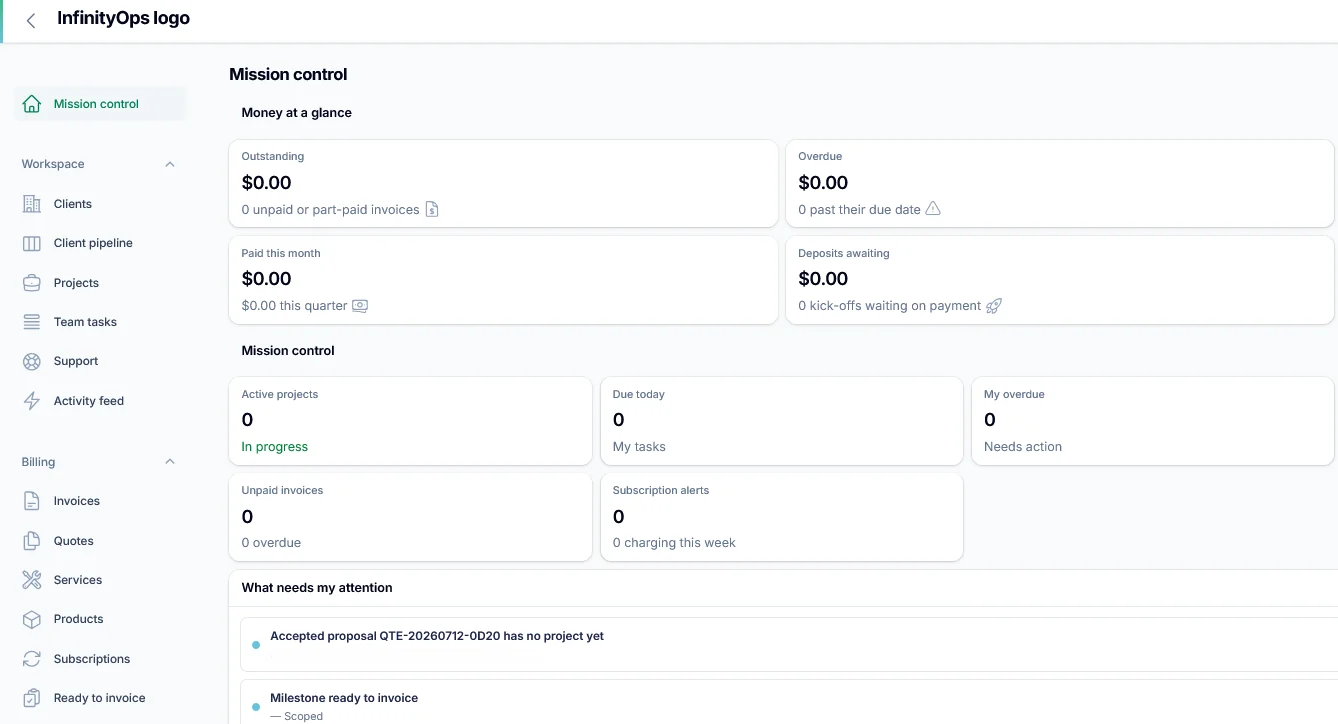
Internal operations platform
InfinityOps
The system we run Infinity Code on. Clients, projects, invoicing, subscriptions and recurring billing in one place instead of five tools.
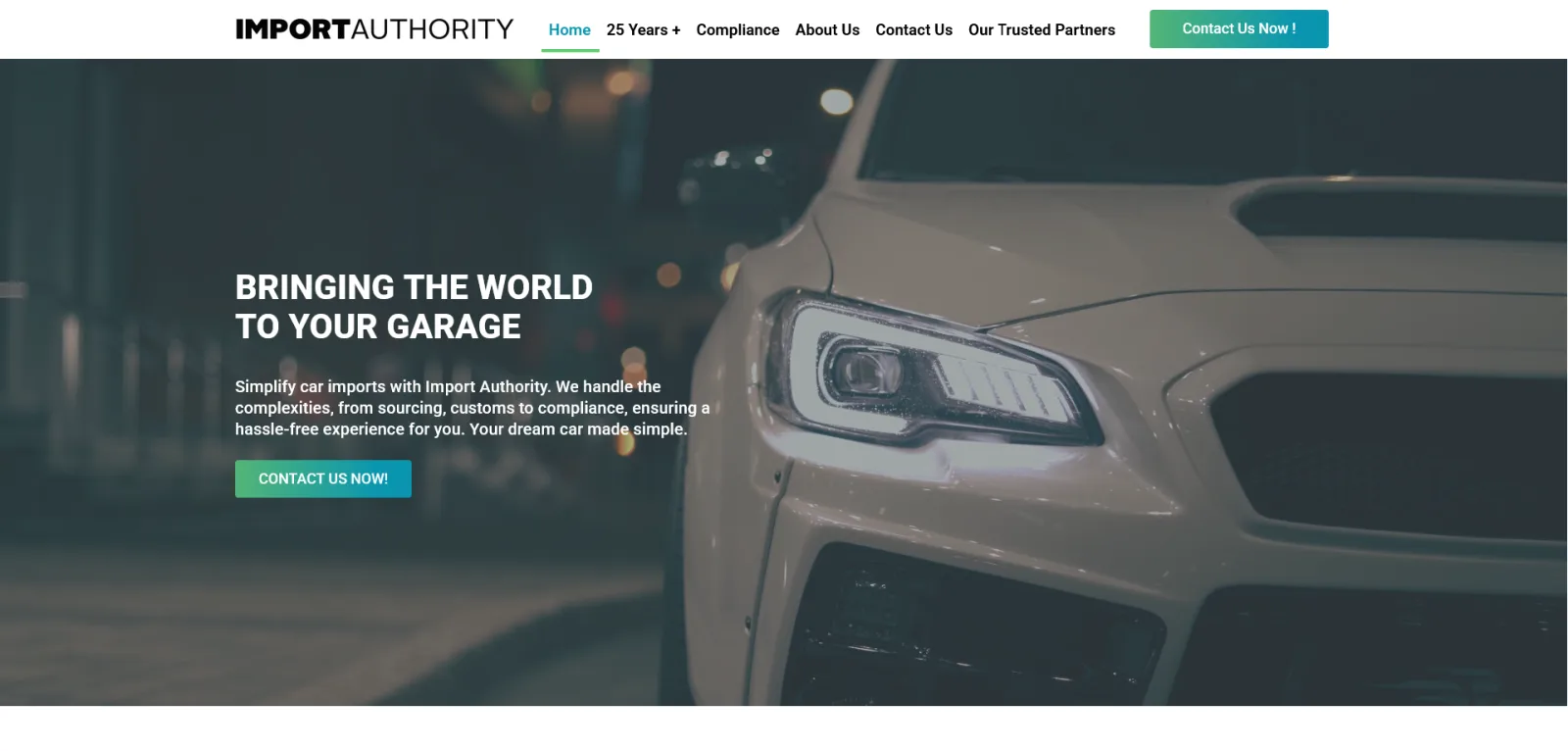
Compliance portal